Authorized AMSOIL Dealer
Joseph Feghali
Miami, FL

1982 Lancia Zagato 2.0L Oil Type and Capacity

Free Vehicle Maintenance App

For cars, trucks, ATVs & more

Track oil changes, save service records, and get maintenance reminders.

Keep your maintenance history handy for your next service.

Your Vehicle's Information

Year:

1982

Make:

Lancia

Model:

ZAGATO

Engine Size:

2.0L

Engine #:

[C]

Recommended oil filters for my 1982 Zagato

Product Name Product Description Product
AMSOIL Ea Oil Filters This filter is for your 1982 Lancia Zagato and is designed to last up to 25k (normal conditions) or 15k miles (severe conditions) or 1 year, whichever comes first. EAO42-EA
AMSOIL Ea Oil Filters EAO42-EA
Add To Cart
Add To Cart

Recommended coolants for my Lancia Zagato

Product Name Product Description Capacities Product
Passenger Car & Light Truck Antifreeze & Coolant maximum protection for your 1982 Lancia Zagato under extreme temperatures and operating conditions! Lasts up to 150,000 miles or five years! (whichever comes first) ANTPC1G-EA
Passenger Car & Light Truck Antifreeze & Coolant ANTPC1G-EA
Add To Cart
Add To Cart
Low Toxicity Antifreeze and Engine Coolant Lasts in your 1982 Lancia Zagato for up to 150,000 miles or five years! (whichever comes first). Biodegradable! ANT1G-EA
Low Toxicity Antifreeze and Engine Coolant ANT1G-EA
Add To Cart
Add To Cart

Maintaining Lubrication Integrity for the 1982 Lancia ZAGATO 2.0L

Proper engine care for a vehicle like the 1982 Lancia ZAGATO 2.0L requires a disciplined approach to fluid management and mechanical inspection. As vehicles age, the consistency of maintenance becomes the primary factor in determining how well internal components continue to operate. For this specific 2.0L application, focusing on the quality of lubricants and the regular monitoring of potential leaks is essential for long-term preservation.

Monitoring Fluid Condition and Potential Seepage

A proactive approach to maintenance involves frequent visual checks of the engine bay. Rather than waiting for a visible puddle to form on the ground, owners should look for signs of seepage around various sealing surfaces. Over time, gaskets and seals can undergo changes in elasticity due to heat cycles and age. When performing routine inspections, examine the areas where major components meet. If you notice any dampness or oily residue on the exterior of the engine block or near connection points, it may indicate that a seal is beginning to lose its effectiveness. Identifying these small amounts of seepage early allows for more controlled maintenance decisions rather than reacting to an active leak. Additionally, checking the condition of any visible hoses and ensuring electrical connections remain clean and secure can prevent secondary issues that might complicate engine service.

Observing Changes in Lubricant Behavior

The behavior of the engine oil itself provides significant information regarding the internal state of the 2.0L engine. It is useful to monitor not just the quantity of oil, but also its physical appearance and how the vehicle operates during different driving conditions. If you notice a change in the color or texture of the oil—such as an unusual cloudiness or a very dark, gritty consistency—this warrants investigation. Such changes can be associated with various factors, including the presence of moisture or the accumulation of combustion byproducts. Furthermore, if the vehicle exhibits any unusual mechanical noises that were not previously present, or if you notice unexpected exhaust characteristics, these symptoms should be investigated promptly. It is important to remember that a single symptom can have multiple underlying causes; therefore, professional diagnosis is often necessary to determine the exact source of an irregularity.

Prioritizing Maintenance Through Documentation

For owners of a 1982 Lancia ZAGATO, establishing a clear maintenance baseline is one of the most effective ways to manage long-term ownership. If you have acquired the vehicle and do not have access to a complete service history, your first priority should be to document its current state. This involves recording the dates and details of every fluid change, filter replacement, and mechanical repair performed moving forward. Having a reliable record allows you to distinguish between routine preventive maintenance and repairs necessitated by actual wear. When records are incomplete, focus on addressing active observations—such as minor leaks or aging components identified during inspection—before moving on to broader service tasks. This condition-based approach ensures that resources are directed toward the most immediate needs of the engine.

Managing Aging Components and Materials

As a vehicle reaches several decades of age, the materials used in its construction respond differently to environmental factors than they did when new. Maintenance should shift from purely following a schedule to observing the actual condition of aging materials. If equipped, accessible drive belts should be inspected for signs of deterioration such as cracking, glazing, or fraying. Similarly, any rubber components or hoses present in the engine compartment should be checked for softness, brittleness, or swelling. While it is not necessary to replace every aged component immediately, being aware of their current state helps prevent unexpected failures. This philosophy of "inspect rather than assume" prevents unnecessary spending while ensuring that critical parts are replaced before they reach a point of failure.

The Role of High-Mileage Formulations

When considering lubricant options for an older engine, some owners look toward specialized formulations. Some high-mileage oil formulations contain additives intended for use in aging engines. These products often include seal-conditioning additives that may assist in maintaining the integrity of various gaskets and seals. While these are not a substitute for repairing active leaks, they can be a consideration during routine service for vehicles with higher operational hours. The decision to use such a formulation should be based on the specific needs and current condition of your 2.0L engine.

Practical Guidance for Buying Engine Oil for your 1982 Lancia ZAGATO 2.0L

When you are ready to replenish your engine's lubricant, the most important step is to ensure the product matches the specific requirements of your vehicle. Do not rely on general automotive knowledge or assumptions based on the age of the car to select a grade. Instead, match the engine oil to the application-specific viscosity information shown above on this page. Before completing your purchase, always verify that the product meets the appropriate API certification listed in your documentation. You may choose between conventional, synthetic blends, or full synthetic oils depending on your specific maintenance goals and the information provided for this application. Always check the product labeling carefully to ensure the viscosity and service ratings are correct for a 1982 Lancia ZAGATO 2.0L. By strictly adhering to the application-specific data provided here, you ensure that the lubrication remains appropriate for the engine's design and current condition.
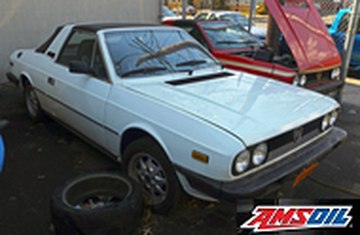
Catalog vehicle photograph for 1982 Lancia ZAGATO
Vehicle photograph from our catalog. Appearance may differ by model or trim.

If you're looking for another year, make or model instead of this 1982 Lancia ZAGATO motor oil, try one of these similar models below. We try to keep one page for each model vehicle.

Visit us on social media